Most minor injuries and illnesses don't require a pharmacy. They require someone who knows what to do and has the right things on hand. This is the starting ground of herbal first aid: the knowledge and the tools to handle the everyday situations that make up most of a household's health events.
What follows is practical information, drawn from traditional Western herbalism. It's a foundation for people who want to build health independence, one situation at a time, not a substitute for professional care when that's what's needed.
When Herbal First Aid Is Appropriate
Herbal first aid has a traditional scope: minor cuts and scrapes, small burns, bruises, sprains, bites and stings, ordinary stomach upset, headaches, minor respiratory complaints, and the early stages of colds and flu. It also supports recovery from larger events.
Severe bleeding, head injuries, chest pain, difficulty breathing, suspected fractures, deep wounds, signs of serious infection, and allergic reactions all require conventional care first. Herbs can support what happens next, but it doesn't replace emergency medical care.
Cuts, Scrapes, and Minor Wounds
The traditional workhorse herbs are yarrow, calendula, and plantain.
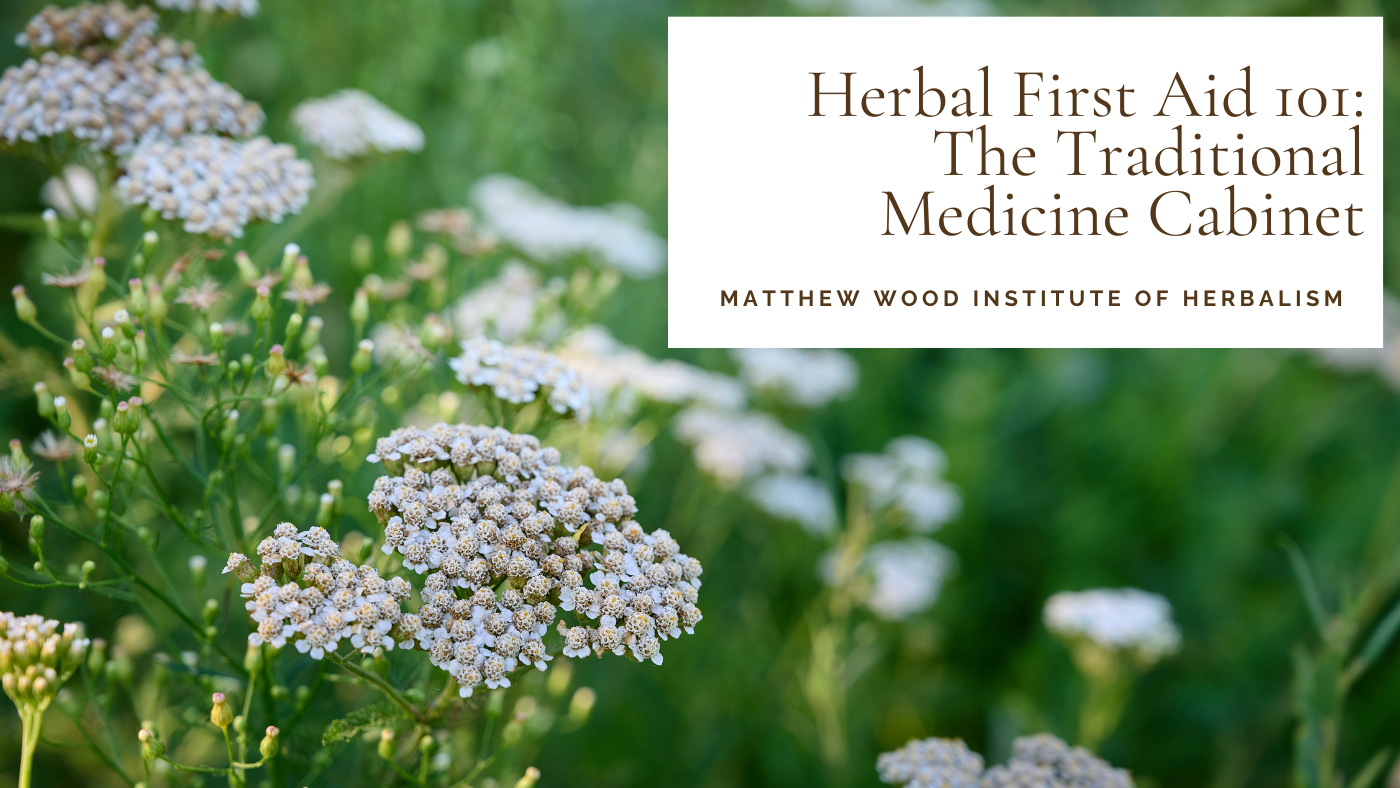
Yarrow has a long tradition as a styptic — powdered dried yarrow pressed into a cut is associated with stopping bleeding quickly.
Calendula is the tradition's skin-mending herb, used as a salve once the wound is clean.
Plantain is traditionally used to draw out debris from a wound or scrape and support the body's cleansing response; fresh leaves chewed or crushed, then applied, are the old country remedy.
Burns
Fresh aloe gel from a cut leaf is the first traditional remedy. Lavender essential oil, applied to a minor burn, is one of the few places where undiluted essential oil use is traditional. St. John's wort in olive oil is the classic traditional burn remedy for sunburns and small kitchen burns.
Anything beyond a first-degree burn, or a second-degree burn larger than a quarter, belongs in medical hands.
Bruises and Sprains
Arnica is a name many people know. Arnica gel or oil applied immediately to a bruise or sprain, on unbroken skin only, is associated with reducing swelling and discoloration. This is typically applied every few hours for the first day.
Bites and Stings
Plantain is a good first move for nearly every bug bite and sting. A leaf chewed or crushed briefly and pressed onto the bite is associated with drawing out irritation. This is the single most useful herb for summer evenings in the Western tradition.
If at any time you feel like it's good to get a bite checked out, or if any bite is showing expanding redness, a bullseye pattern, or systemic symptoms requires medical attention promptly.
Stomach Upset
Ginger is one of the most trusted herbs for nausea, motion sickness, and cold-pattern indigestion. Peppermint is traditional for gas and bloating. Chamomile handles stress-related gut distress and works well for children. These three cover most acute digestive situations in household practice. A tea made from the herb that fits best is a grounded way to start.
Headaches
Tension headaches are traditionally addressed with peppermint, either as tea or as diluted essential oil on the temples.
Migraines are a different category and deserve dedicated attention beyond a first aid approach — ideally with a practitioner who can work with the underlying pattern.
Building a Basic Herbal First Aid Kit
A basic kit fits in a shoebox. Traditional contents include:
- calendula salve
- plantain salve or infused oil
- arnica gel
- St. John's wort oil
- lavender essential oil
- dried ginger for a tea or even candied ginger
- dried yarrow (powdered)
- dried chamomile
- dried peppermint
You may also want to include gauze, bandages, and a small pair of tweezers.
Creating your kit may cost around $100, or it might cost you a couple of weekend afternoons to make your own herbal products.
When to Seek Conventional Medical Care
The rule is simple: when in doubt, call a medical professional. Herbal first aid is capable within its traditional scope. Although herbs can be supportive in a time of crisis, they may not be appropriate in a medical emergency, and knowing the edge of one's competence is part of the competence itself.
Many times, herbal tradition offers tools that are often faster, cheaper, and more effective than what's in the medicine aisle. Start with a basic kit, use it a few times, and the knowledge becomes yours.
Get the free First Aid Guide. Our
free herbal first aid guide is a simple, practical guide to starting your herbal first aid kit, created with the beginner in mind.
Learn to read the situation, not just the symptom. Our
Holistic Herbal Assessment Skills free class teaches how traditional Western herbalists actually look at a person in front of them — the pattern, not the label. Free and open to everyone.